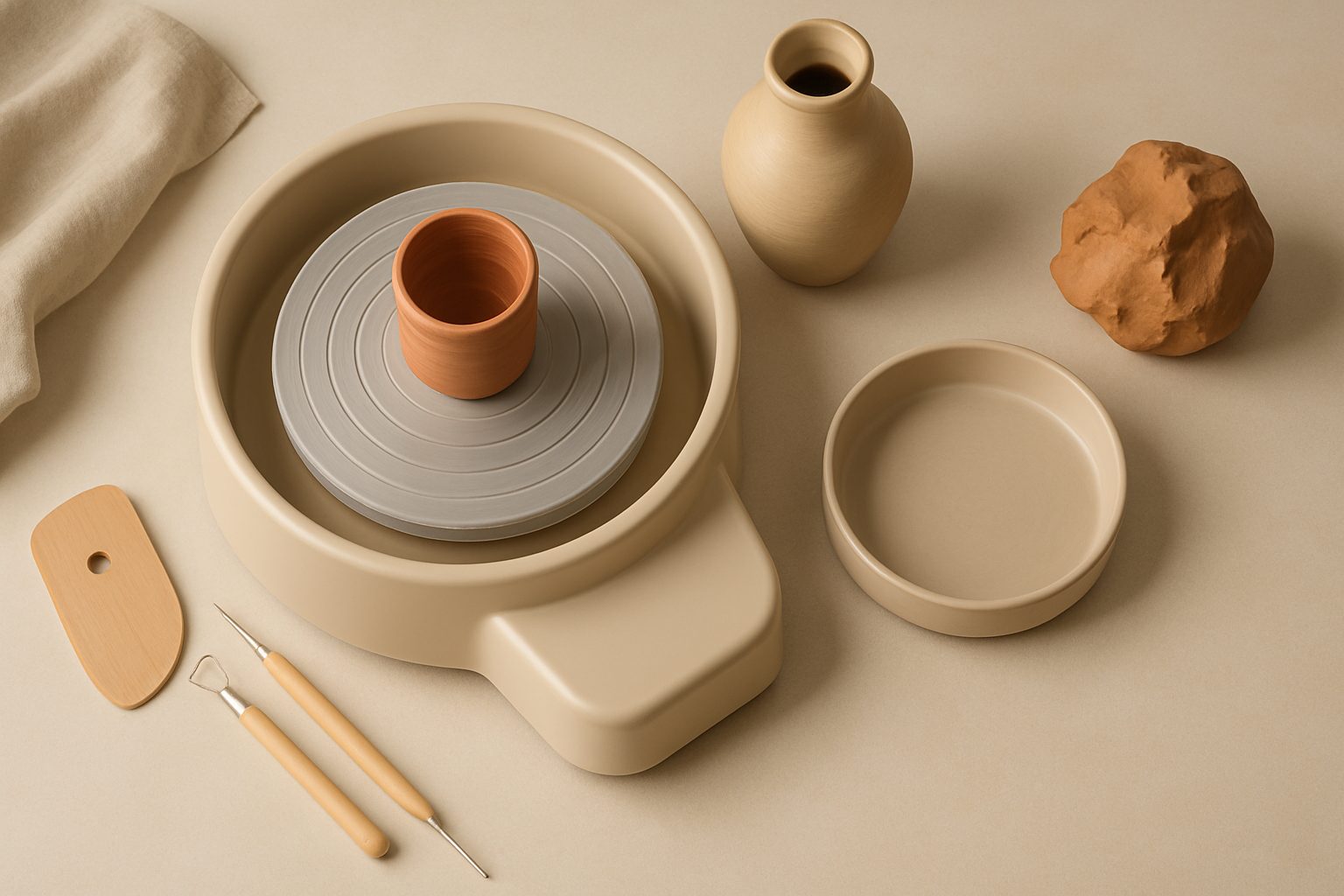
Best Electric Pottery Wheels for Hobbyists UK — Mid-Range Motors Worth Buying
When you've moved beyond your first few pottery projects and discovered you actually enjoy the work, upgrading from a basic wheel becomes a real consideration. Hobbyists stepping into mid-range equipment face a genuine choice: invest in something that won't frustrate you during longer sessions, but won't break the bank either. The sweet spot sits around 25 to 100 pounds (11–45 kg) clay capacity—enough to handle serious projects without the cost or studio footprint of a professional machine.
Why Motor Type Matters More Than You'd Think
The most overlooked spec when buying a pottery wheel is the motor. Brushless motors have become the standard in quality hobbyist equipment, and for good reason. They run cooler, last significantly longer, and require virtually no maintenance compared to older brush-based designs. If you're committing to pottery for the medium term—not just dabbling—a brushless motor will outlast the wheel's actual structural components.
Most quality hobbyist wheels sit in the 1–2 horsepower range. That's sufficient for hand-building and centring clay at the sizes you'll regularly work with. Underpowered motors struggle visibly once clay mass exceeds about 20 pounds; overpowered motors are unnecessary for hobby work and waste electricity.
Speed control and smoothness matter in ways you won't appreciate until you experience them. Cheaper wheels often have jerky speed transitions or dead zones in their low-speed ranges, making it genuinely difficult to centre delicate work. Better controllers provide continuous speed adjustment without hunting or stuttering.
Shimpo VL-Lite: The Accessible Workhorse
Shimpo's VL-Lite represents solid mid-range value. It sits comfortably in the 25–50 pound clay-capacity range and is genuinely popular among UK hobbyists who've upgraded from entry-level equipment. The motor is reliable and the wheel-head is nicely proportioned for hand-building and throwing.
The VL-Lite's main strengths: compact footprint for home studios, straightforward controls, and parts availability in the UK. It's not fancy, but the engineering is sound. Shimpo's reputation for longevity is well-earned—these wheels genuinely last.
Weaknesses worth acknowledging: it's not the smoothest ride at low speeds, and the kick-wheel feel some potters prefer is absent. It's also loud enough that you wouldn't want to work in an open-plan space. Power consumption is reasonable but not exceptional compared to newer models. The foot pedal control takes a bit of getting used to if you're transitioning from a hand-controller.
Brent B: Precision Engineering
Brent wheels occupy a different category—they're heavier machines built with tighter tolerances. The Brent B specifically is a semi-professional wheel that many hobbyists choose if they're considering teaching or selling work eventually.
The clay capacity runs 50–90 pounds comfortably, and the wheel-head is larger than the VL-Lite's, which some potters find crucial for open-form throwing. The brushless motor is genuinely quiet and the speed control is buttery smooth across the full range—you really notice this when centring. The foot pedal is more responsive and less twitchy than some alternatives.
The catch: Brent wheels cost significantly more, and they're substantially heavier (easier to move than a massive kiln, but you're not lifting it one-handed). For hobbyists, this is overkill unless you know you'll be working regularly at larger scales. They're built to withstand daily professional use, which is wasted on three-evening-a-week throwing. The larger footprint matters if your studio space is tight.
Skutt Thomas Stuart: The Value Challenger
Skutt's Thomas Stuart model offers genuine competition in the mid-range. It's designed specifically for hobbyist-to-semi-professional work and hits a sweet spot in clay capacity (up to 80 pounds) and price.
The brushless motor is excellent—quiet, smooth, and genuinely durable. Speed control is responsive and fine-tuned, particularly useful for delicate hand-building work. The compact design means it occupies less space than the Brent without sacrificing stability. If you're working in a shared studio space or a converted spare room, the smaller footprint is a real advantage.
The Thomas Stuart doesn't carry Brent's premium build quality throughout, and some components feel slightly less overbuilt. That's not a weakness for hobbyist use—it's intelligent design. You're not paying for professional-grade durability you won't use. Availability in the UK is good, though spares can take longer to arrive than Shimpo parts.
Choosing Between Them
Pick the Shimpo VL-Lite if you're budget-conscious, work mainly at smaller scales (under 25 pounds regularly), and want something proven and readily available in the UK. Accept that it won't feel premium and acknowledge the noise level.
Choose the Brent B if you're throwing larger pieces regularly, want the smoothest experience possible, and might develop this into teaching or selling work. The investment makes sense if you'll use it three-plus times weekly for years.
Go for the Thomas Stuart if you want quality and smooth performance without the Brent's premium, and space is a consideration. It's the pragmatic middle ground—capable enough to grow into without paying for features you'll never use.
The Brushless Motor Reality
This matters enough to repeat: brushless motors are worth the premium. They're quieter, run cooler, and demand no maintenance. The older brush-commutator systems were genuinely annoying—brush dust, worn brushes that needed replacing, more heat generation. If you're looking at any wheel with a brush motor to save money, don't. Spend the extra and get brushless. You'll still be using it in ten years.
Consider also the warranty and support network. Shimpo and Brent are established names with UK dealers who stock parts. Skutt is reliable but slightly smaller, which can matter when you need a replacement bearing or controller at short notice.
A decent pottery wheel is a five-to-ten-year investment if you choose well. Buy for the work you're actually doing now, not some imagined professional studio you might open later. These three models will genuinely serve you well if they match your actual clay capacity and working space.
More options
- Shimpo Aspire Pottery Wheel (Amazon UK)
- Speedball Artista Pottery Wheel & Starter Kit (Amazon UK)
- Vevor Electric Pottery Wheel (Budget Range) (Amazon UK)
- Pottery Tool & Accessory Sets (Amazon UK)
- Air-Dry & Stoneware Pottery Clay (Beginner Packs) (Amazon UK)