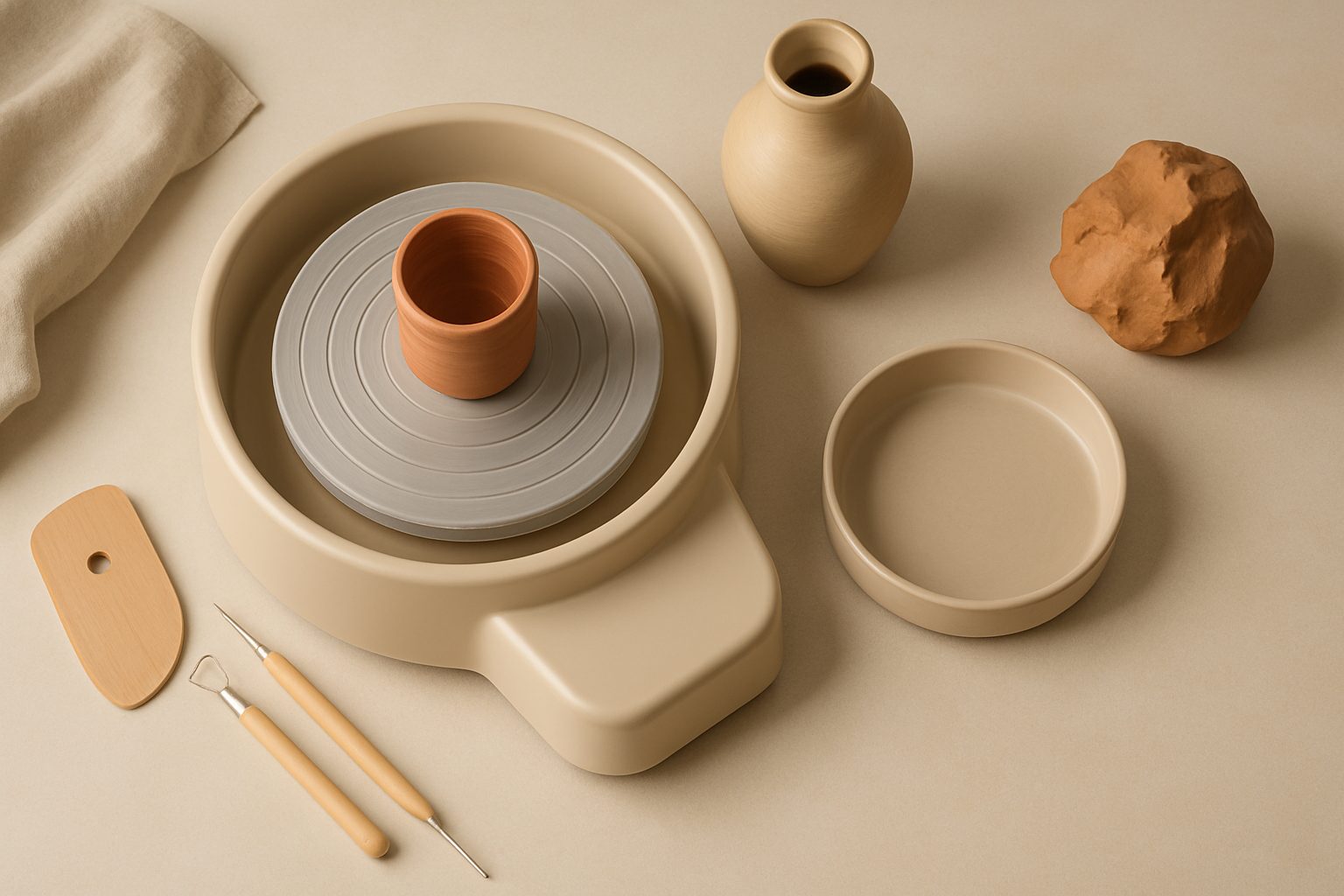
Pottery Wheel Accessories Buyers Guide UK — What You Actually Need
When you're starting out with pottery, the sheer number of "essential" accessories can feel overwhelming. Online shops will happily sell you dozens of tools, but honestly, you don't need most of them. I've thrown pottery for years, and I've learned what actually makes a difference to your practice—and what just clutters your studio shelf. This guide cuts through the noise.
The key insight: good pottery comes from technique, not gadgets. That said, certain accessories do solve real problems. The right tools reduce frustration, speed up your workflow, and protect both your work and your sanity.
Wire Tools and Cutting
You'll need a way to cut finished pots cleanly from the wheel. A simple wire tool—two wooden handles with steel wire strung between them—is the standard. Sounds basic, but it's genuinely essential. Cheap wire tools often have springs that fail or bend under pressure. Look for solid hardwood handles and taut, quality stainless-steel wire. A good one costs £5–£12 and lasts years.
There's also the credit-card cut method (using a flat, rigid card), which costs nothing and works fine if you're patient. Many potters use both depending on the clay and what they're throwing. For beginners, a proper wire tool removes one variable and makes clay removal more reliable.
Avoid novelty cutting tools with multiple wires or rotating mechanisms. A single wire does the job better.
Bat Systems
Bats are circular discs that sit on your wheel head, holding your pot so you don't have to throw directly onto the wheel. They're a game-changer if you throw regularly—you throw, pop the bat off, and move your pot to dry elsewhere. This means your wheel stays free for the next piece.
Bat systems come in two types: expanding (mechanical jaws that grip the bat) and magnetic (bats with metal plates that stick to a magnetic wheel head). Expanding bats are universal and work with most wheels. Magnetic systems are pricier upfront but smoother and cleaner once installed.
Bats themselves cost around £8–£15 each. You'll want at least three or four so you're not waiting for pots to dry. Get them in sizes that match your wheel (typically 25 cm, 30 cm, or 35 cm diameter). Rough texture on top prevents pots sliding about mid-throw.
If you're throwing small items regularly, bats are worth the investment. If you throw occasionally and don't mind spending extra time at the wheel, you can skip them.
Trimming Tools
Once your pot is leather-hard, you'll need to trim the base—removing excess clay, tidying the foot, and making it flat enough to sit safely. A basic wooden trimming tool (looks like a loop on a stick) costs £2–£4 and works fine. A loop tool gives you more control than a needle.
More specialised options include double-loop tools and angled cutters, which save time if you throw daily. For casual potters, a single loop and a sharp metal kidney scraper cover everything you need.
Don't overthink trimming tools. Potters have been doing this for centuries with minimal gadgetry.
Sponges and Buckets
You need a way to dampen your hands and clay during throwing. A natural sea sponge holds water well and doesn't shed like synthetic alternatives. A good one costs £3–£6 and lasts ages. Honestly, a cheap synthetic sponge works just as well—the difference is marginal.
What matters more is having water within reach. A bucket, bowl, or dedicated sponge bucket sitting at the wheel eliminates friction. Warm water is more comfortable on your hands during long sessions, especially in winter.
Aprons and Splash Pans
Clay is genuinely messy. An apron saves your clothes and makes cleanup faster. Canvas or heavy cotton aprons with pockets cost £12–£25. Pottery-specific aprons often have a rough surface that improves grip—worth the extra couple of pounds.
A splash pan (a ring that sits around your wheel base) catches flying water and clay, making your studio less of a disaster. Basic metal ones cost £15–£30. They're not essential if you've got good flooring and don't mind a cleanup, but they're genuinely convenient.
Liners and Wheel-Head Protection
Splash-pan liners—replaceable plastic or cloth layers that line your pan—cost £5–£10 and save you from scraping dried clay. Similarly, wheel-head covers (silicone or leather) protect against wheel-head damage and reduce clay sticking.
These are quality-of-life improvements. Genuinely useful if you throw frequently, less critical if you use your wheel once a month.
What to Skip
You don't need a separate tool for every stage of the process. Fancy calipers, sprayers, or decorative gauges appeal to Instagram aesthetics more than actual function. Your thumbnail and a ruler work for measuring. A spray bottle costs 50p and does everything a £20 pottery sprayer does.
Avoid tool kits that bundle loads of cheap items. Buy individual tools as you discover what you actually use.
Buying Smart
UK online suppliers stock most of these accessories for reasonable prices. Check reviews—especially on sponges and bat systems, where quality varies. Buy used if you can; potter's tools hold up beautifully and are cheaper secondhand.
Start minimal. Buy a wire tool, a sponge, maybe a bat system if you throw regularly. Add accessories as you encounter problems they solve. Your best teacher isn't a tool—it's repetition. Good technique beats gadgets every single time.
More options
- Shimpo Aspire Pottery Wheel (Amazon UK)
- Speedball Artista Pottery Wheel & Starter Kit (Amazon UK)
- Vevor Electric Pottery Wheel (Budget Range) (Amazon UK)
- Pottery Tool & Accessory Sets (Amazon UK)
- Air-Dry & Stoneware Pottery Clay (Beginner Packs) (Amazon UK)