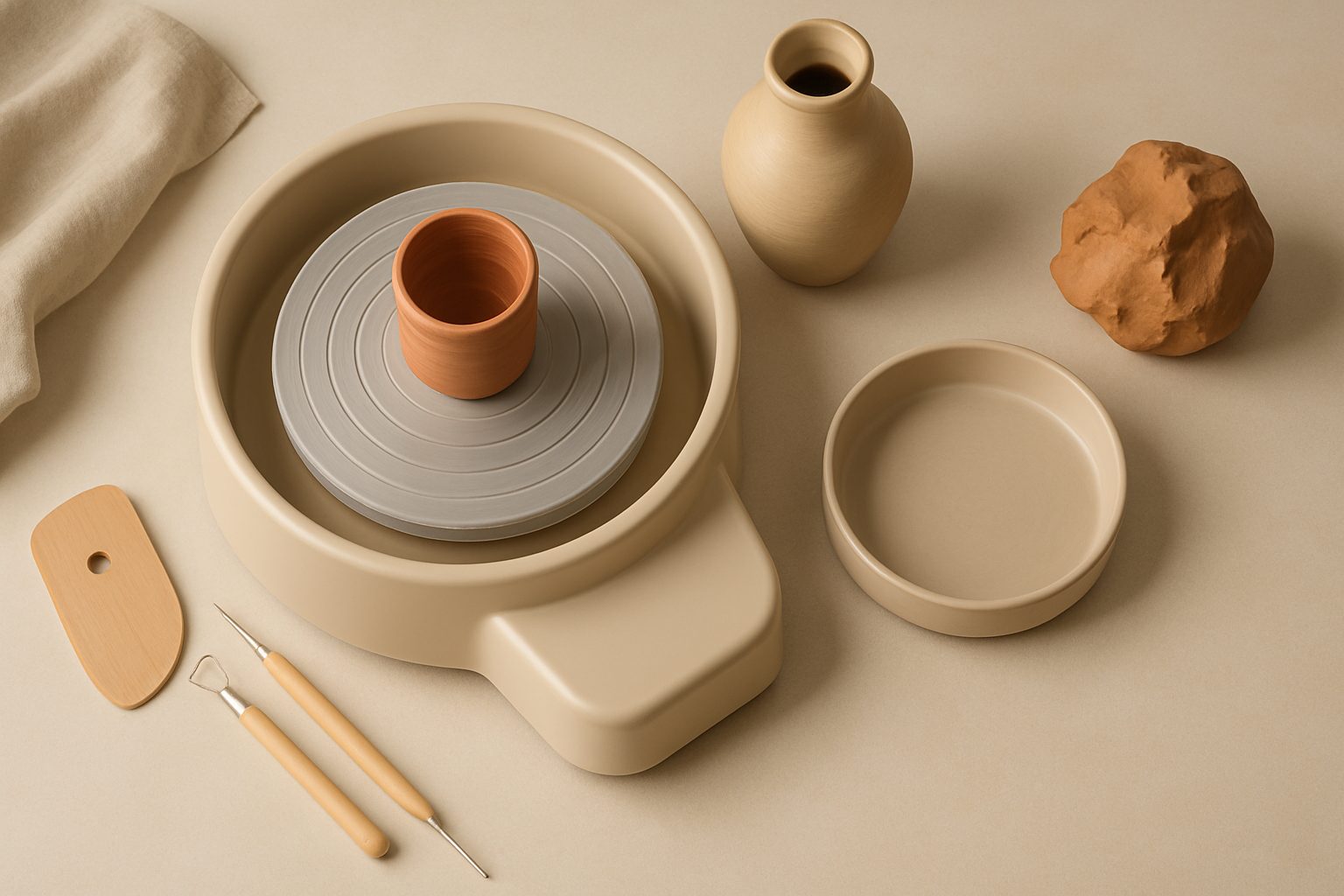
Pottery Wheel vs Hand-Building — Which Should UK Beginners Buy First?
If you're considering getting into pottery at home, the first question is usually straightforward: should you buy a wheel or start with hand-building? The answer depends on what you actually want to make, how much space and money you have, and how patient you are during the learning phase.
Both approaches are legitimate starting points. What matters is understanding their genuine differences before you commit £300 to £1,000+ on equipment you might regret.
The Cost Reality
Hand-building requires almost nothing to start. A set of basic tools (wooden modelling tools, wire cutting tools, sponges) costs £15–30. A few bags of clay from Pottery Craft or similar suppliers run £10–20 per 12.5kg. You're looking at a total investment of under £50 to make your first pieces.
A pottery wheel changes everything. Entry-level wheels suitable for home use start around £400–600 in the UK. Decent mid-range options sit between £700–1,200. Then you need a sturdy workbench or stand, clay (wheels consume more), access to a kiln (the real expense—firing clay at home costs £200–400 for a small kiln, plus ongoing electricity), and basic tools.
If you don't own a kiln, you'll rely on community studios or pottery schools for firing. A single firing can cost £5–15 per piece depending on size, which adds up quickly.
Winner: Hand-building — dramatically cheaper to start. But: if you're serious about pottery long-term, the wheel and kiln investment is worth spreading across several months rather than avoiding entirely.
Learning Curve and Time Investment
Hand-building techniques—coil, slab, pinch pots—are accessible within your first session. You'll make recognisable pieces immediately. The learning curve is gentler, which keeps motivation high early on. Mistakes feel less wasteful because materials are cheap and there's less gear to master.
Pottery wheels, by contrast, have a notoriously steep initial learning curve. Throwing (the technical term) requires both hands working independently whilst managing wheel speed and clay pressure. Most people spend 5–10 hours on a wheel before producing anything intentional. Your first 20 pieces might be wonky, unusable, or collapse mid-throw. This frustrates some people enough to quit.
However—and this is important—the learning plateau flattens much faster on a wheel. Within 2–3 weeks of regular practice, you'll throw basic bowls and cylinders. Hand-building doesn't have the same breakthrough moment; you improve in smaller, less visible increments.
Winner: Hand-building for first month. But: if you persist past the initial frustration, the wheel accelerates progress.
Space and Mess
Hand-building is compact. You need a table, a damp cloth, and a sealed container for clay. Total footprint: roughly 1.2 metres square. Clay dust is minimal if you work cleanly.
Wheels require dedicated space. A wheel and stand take up 1.5–2 metres square, and you'll want extra room around it for movement and storage. Wheel throwing creates significant clay splatter—wet clay flies off at speed during bad throws. You'll need easy-clean flooring (sealed concrete, vinyl) rather than carpet. Water and clay water become part of the environment; if you're working in a bedroom or living room, wheels cause problems.
If you live in a flat with limited space, hand-building is realistic. A wheel is genuinely difficult.
Winner: Hand-building — far less intrusive. Wheels need proper workshop space to be practical.
What You Can Actually Make
This is the honest bit. Hand-building produces: bowls, tiles, sculptural pieces, decorative objects, slab-built vessels, textured pieces. What you can't easily make are symmetrical round vessels—plates, mugs, large cylinders—without a wheel. Hand-built cylinders look intentionally wonky or deliberately artistic. That's fine if it's your aesthetic; frustrating if it isn't.
Wheels excel at the things hand-building struggles with: perfectly round mugs, bowls, plates, and uniform cylinders. If your mental image of "pottery" involves throwing a pot on a wheel, hand-building won't satisfy that.
Real talk: Many people romanticise the wheel before trying it. If you've never touched clay before, start with hand-building. You'll discover what you actually enjoy making. Some people find hand-building more creatively satisfying long-term. Others get the wheel-throwing itch within weeks. Self-knowledge is cheaper than a £600 mistake.
Maintenance and Durability
Hand-building tools last indefinitely if stored dry. Clay is cheap to replace. No electrical components means nothing breaks.
Wheels require maintenance. Motors can fail (repair: £150–300). They're electrically powered, adding noise and requiring an outlet. Wheels wear down and require eventual replacement.
Winner: Hand-building — less to go wrong.
The Verdict
Choose hand-building first if:
- You're testing whether pottery is actually for you
- You have limited space or a non-dedicated room
- You want immediate visible progress
- You're on a tight budget
- You like sculptural, organic, or deliberately imperfect aesthetic
Choose a wheel if:
- You have dedicated workshop space with proper flooring
- You specifically want to throw symmetrical vessels
- You're willing to invest £1,000+ across 6 months (wheel + kiln or regular studio access)
- You're genuinely committed before buying (consider hiring studio space by the hour first to test)
Most experienced potters recommend: hand-build for 2–3 months, then decide. By then you'll know if pottery sticks, what your actual aesthetic is, and whether the wheel investment makes sense. This approach costs under £100 and clarifies a decision that most people make backwards—wheels first, regret later, then turn to hand-building.
The best choice isn't wheel versus hand-building. It's starting small, learning what you actually want, then building from there.
More options
- Shimpo Aspire Pottery Wheel (Amazon UK)
- Speedball Artista Pottery Wheel & Starter Kit (Amazon UK)
- Vevor Electric Pottery Wheel (Budget Range) (Amazon UK)
- Pottery Tool & Accessory Sets (Amazon UK)
- Air-Dry & Stoneware Pottery Clay (Beginner Packs) (Amazon UK)