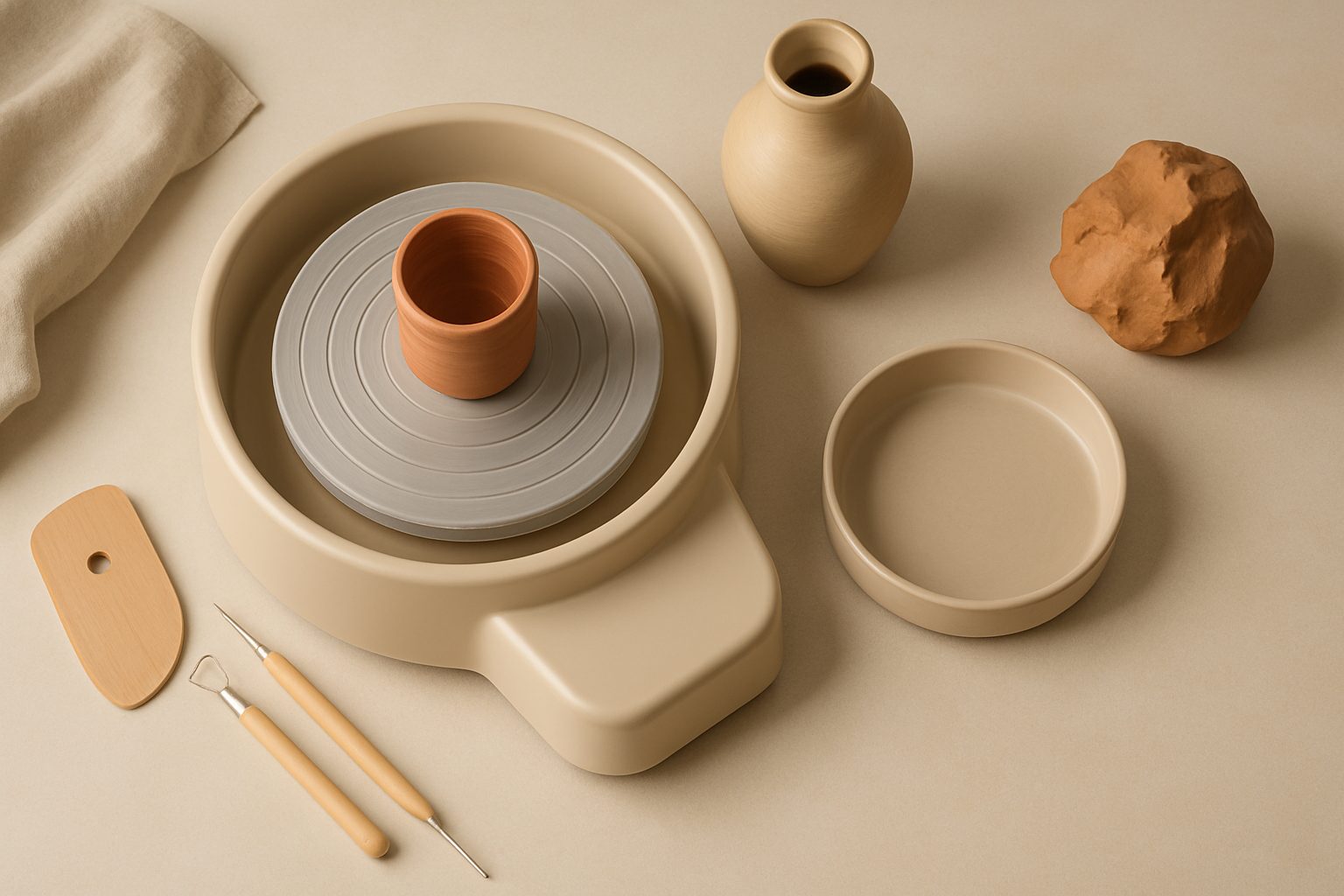
Best Pottery Wheels for Kids & Teenagers UK — Safe, Fun & Affordable
Pottery wheels designed for adults can feel overwhelming for younger potters—they're often too powerful, take up too much space, and lack the safety features children actually need. Whether you're a parent looking for a gift, a teacher setting up a school studio, or a teenager keen to start ceramics, the right wheel makes all the difference. A well-chosen beginner's wheel will build confidence and technique without frustration or risk.
Why Kids Need Different Wheels
Children and teenagers benefit from wheels with lower power, better stability, and hands-on safety in mind. Adult wheels typically run at 300+ watts and reach high speeds quickly, which can be dangerous for inexperienced hands and tiring for smaller frames. Purpose-built youth models operate at 100–200 watts, offer gentle acceleration, and often feature lower-profile designs that don't strain posture during longer sessions.
Safety doesn't just mean lower power—it means stable bases that won't tip, emergency stop buttons within easy reach, and clay-catching trays built into the design. A wheel that's too expensive also creates pressure; younger potters learn best when they feel free to experiment without anxiety about breaking something costly.
What to Look For
Speed control is crucial. Look for wheels with variable speeds or a dedicated low-speed range (0–60 RPM). This lets beginners centre clay gently without the wheel suddenly ramping up. A foot pedal is generally easier for younger users than a hand dial, though some prefer the stability of buttons.
Size and weight matter more than marketing suggests. A wheel 30 cm or smaller in diameter fits comfortably in bedrooms, classrooms, and living rooms. Lighter models (under 10 kg) are easier to position and safe to move between locations. Heavier wheels offer more stability, so there's a trade-off; 8–12 kg tends to be the sweet spot.
Throwing surface should offer decent grip. Some cheaper models use smooth surfaces that clay slides on; textured or rubber-coated heads make centring easier. A removable bat system (typically 20 cm bats) is practical—you can let pieces dry on the bat between sessions without clogging the wheel.
Power and runtime shouldn't be underestimated. A wheel that cuts out after 20 minutes is frustrating mid-session. Look for at least 45 minutes of continuous use before needing a cool-down break. Tabletop models with 100–150 watts typically manage this; extremely cheap models sometimes overheat quickly.
Water management is less glamorous but essential. Clay work requires water for lubrication and smoothing. A recessed head or built-in splash guard keeps water off electronics. Some models have drainage holes; this saves cleanup and protects components.
Wheels Worth Considering
Compact tabletop wheels (20–30 cm head, 100–150 watts) are the most practical starting point. They fit anywhere, cost £150–350, and run quiet enough for home use. Brands like Shimpo and Brent make compact versions that feel closer to full-size wheels than truly budget models. They're sturdy enough that a teenager won't outgrow them quickly; many potters keep tabletop wheels even after buying larger studio equipment.
Lightweight pedal wheels (30–35 cm, 150–200 watts) offer more classic potter appeal for ages 14+. They take up a corner of a room but feel less "toy-like" than tabletop models. Prices range £250–600. These wheels tolerate longer sessions better than compact models and the foot pedal gives good intuitive speed control.
Budget micro wheels (under £100) exist and can work as genuine first introductions to pottery, but often suffer from unstable bases, limited variable speed, or poor water containment. If cost is the only factor, they're better than nothing; if you can stretch to £150–200, you'll find something more enjoyable.
DIY and upcycled options appear on local-market sites. Older, broken wheels from art studios are sometimes sold for spares, but repairs require potter expertise most families won't have. Only go this route if someone in your circle is experienced.
Gift Ideas and Starter Packages
A pottery wheel works best alongside a few essentials: quality clay (earthenware is most forgiving for beginners), throwing tools, and something to catch splashwater. Some retailers bundle wheels with beginner kits; check what's included. A good starter clay pack from a specialist pottery supplier costs £15–30 and lasts weeks of regular use.
For teenagers, consider pairing a wheel with a pottery class or online tutorial access. The most expensive wheel won't teach hand positioning or troubleshooting centring issues; good instruction is more valuable than a premium machine.
Getting Started Realistically
Young potters usually throw for 20–40 minutes per session, then need a break. That's fine—it's better than pushing exhaustion. Most don't need a wheel they'll use daily for years; they need one to try pottery seriously, discover whether they love it, and build foundational skills.
Expect a learning curve of 5–10 sessions before centering feels intuitive. This is normal and applies regardless of wheel quality. A wheel priced at £200 will teach the same pottery fundamentals as one at £600; the difference is durability and comfort, not magical faster learning.
The Practical Bottom Line
For most UK households introducing a child or teenager to pottery, a compact tabletop wheel at £150–280 hits the balance between affordability, safety, and usability. They're quiet, stable, take up minimal space, and will handle hundreds of hours of hobby-level work. Step up to a lightweight pedal wheel only if space and budget allow, or if the young potter has already committed to regular practice.
Pottery is learned by doing, not by owning expensive equipment. Start modest, let interest and skill guide any future investment.
More options
- Shimpo Aspire Pottery Wheel (Amazon UK)
- Speedball Artista Pottery Wheel & Starter Kit (Amazon UK)
- Vevor Electric Pottery Wheel (Budget Range) (Amazon UK)
- Pottery Tool & Accessory Sets (Amazon UK)
- Air-Dry & Stoneware Pottery Clay (Beginner Packs) (Amazon UK)